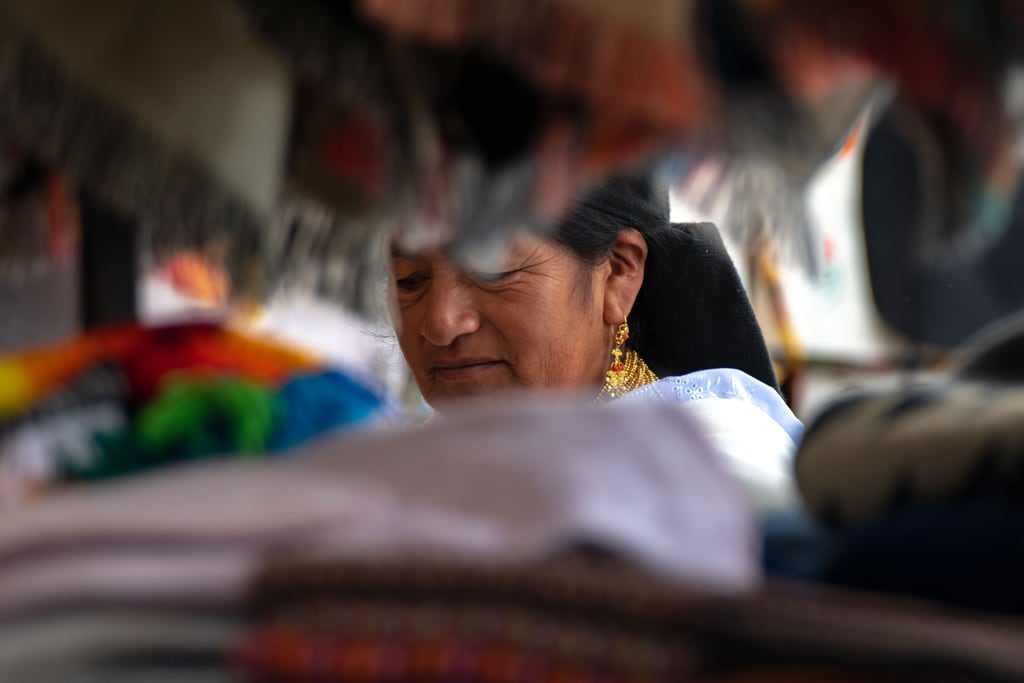
Otavalo's Saturday market is one of the oldest and largest indigenous markets in South America, and it draws photographers from around the world for exactly the reason it also draws scrutiny: it's an extraordinary opportunity for portraiture, and an extraordinarily easy place to do that badly. Here's how we brief every guest before we go.
How to ask
Always ask before photographing a specific person, even if it feels like it slows you down. A smile, eye contact, and a simple gesture toward your camera works across the language gap — most vendors will respond clearly with a yes or no. If your guide is nearby, let them make the introduction; it changes the entire tone of the interaction from transactional to genuine.
What to offer
The single best thing you can do is buy something. Textiles, jewelry, and woven goods at Otavalo are the actual livelihood behind the faces you want to photograph — a purchase is a far more meaningful exchange than a tip for a photo, and it usually opens the door to a longer, more relaxed portrait session than a quick transactional shot ever would.
Compositions that honor the market
Wide environmental shots that show the scale of the textile stalls and the color density of the plaza work as well as tight portraits — don't feel pressured into close-ups as the only "real" shot. Include hands at work: weaving, folding, arranging goods. It grounds the portrait in craft and labor rather than treating a person as a purely visual subject.
Final thought
The best Otavalo portraits we've seen from guests all share one thing: the photographer spent real time there first — talking, buying, being present — before ever raising a camera. Slow down and the market gives you far more than a fast, transactional shoot ever could.