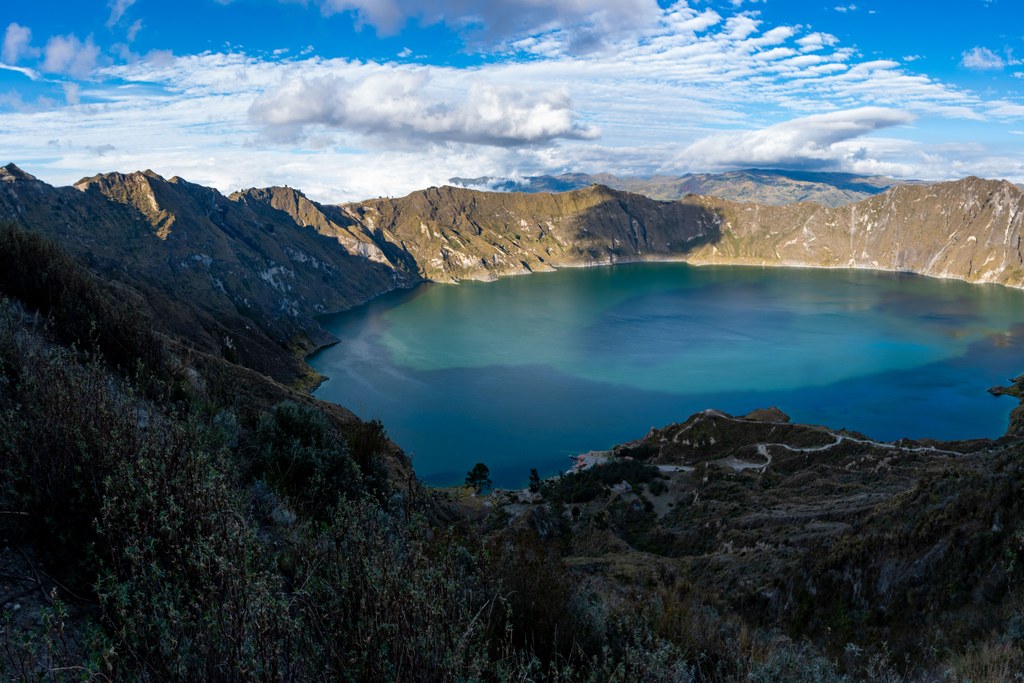
Quilotoa is a water-filled caldera at just over 12,800 ft, and it's one of the most reliably photogenic spots in the Ecuadorian highlands — a nearly perfect turquoise lake sitting inside a volcanic crater. It's also deceptively demanding at that altitude, so a little preparation goes a long way.
The rim viewpoints
Most visitors shoot from the main viewpoint near the parking area at the village of Quilotoa, and it's a genuinely great composition — but walking even 10–15 minutes along the rim trail in either direction opens up angles without other travelers in frame, plus a wider view of the lake's full oval shape. If you have half a day, hiking a meaningful stretch of the rim trail gives you an entirely different set of foreground options: agricultural terraces, grazing llamas, and dramatic drop-offs into the crater.
When the turquoise pops
The lake's color comes from dissolved minerals and shifts with the light and the day's haze — it reads most vividly under soft, even overcast, when there's no harsh reflection off the surface. Midday sun tends to wash the color into a flatter blue-grey via glare; early morning and late afternoon, with the sun lower and more angled, usually deliver the richest color saturation.
Handling the altitude
At nearly 13,000 ft, even short walks along the rim can leave unacclimatized visitors winded, and the descent into the crater (a genuinely steep, roughly hour-long round trip) is harder than it looks from the rim. Spend a night or two at moderate elevation before attempting it, drink more water than feels necessary, and don't schedule it as your first stop straight off a flight from sea level.
Final thought
Quilotoa is one of the rare places where the obvious postcard shot really is worth taking — but the extra twenty minutes of rim walking almost always produces the photo you'll actually print.