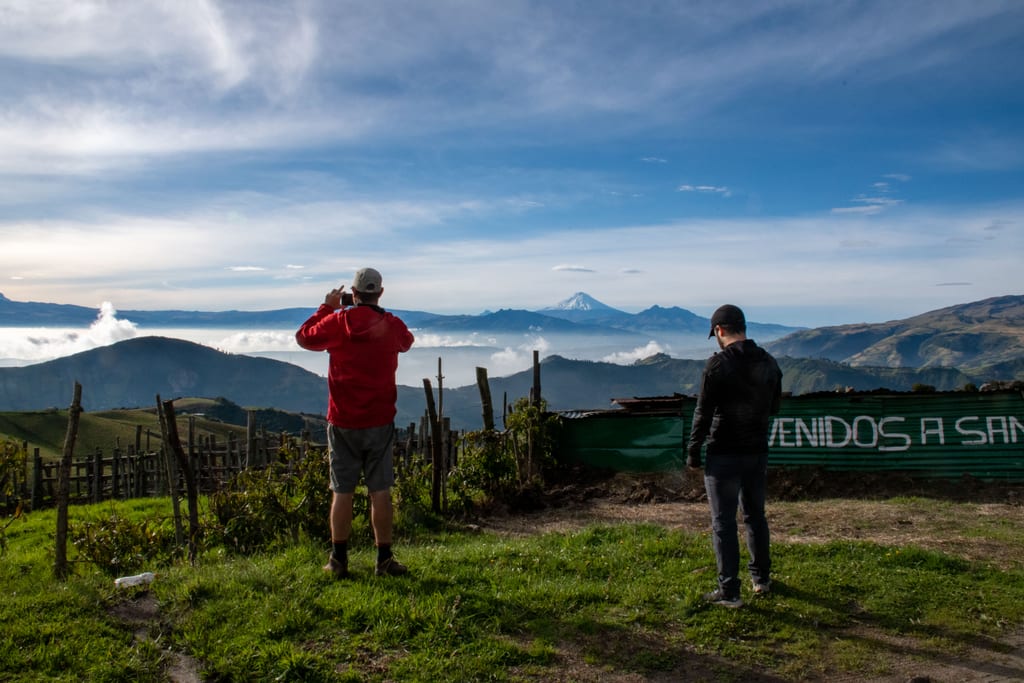
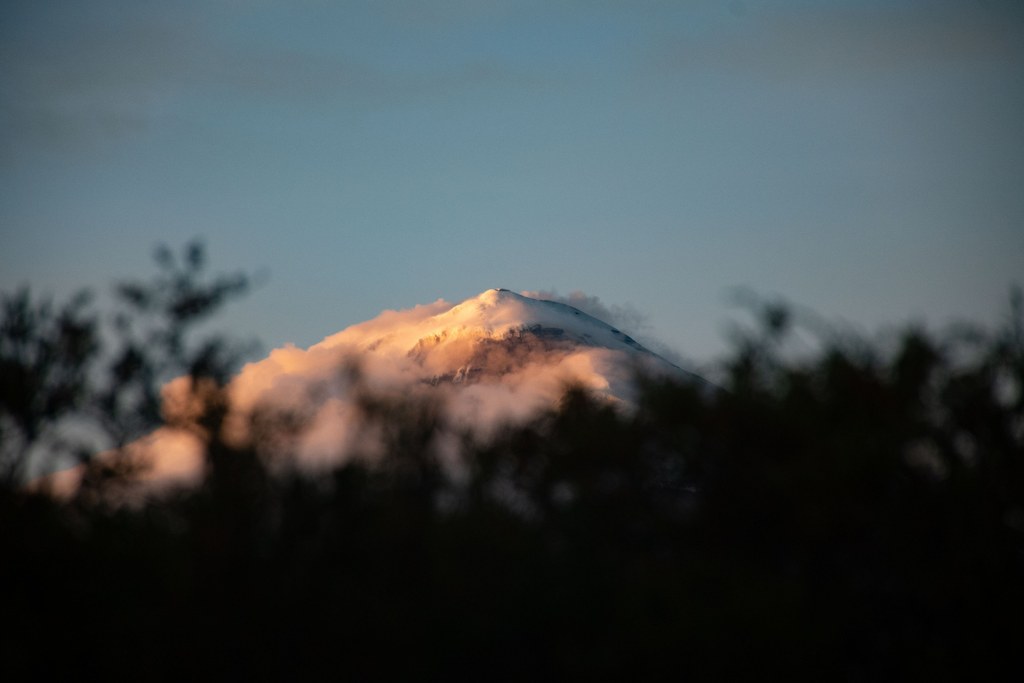
Cotopaxi is one of the most symmetrical volcanic cones on Earth, and also one of the shyest — its 5,897 m summit builds its own weather, and on any given day there's a real chance it never fully clears. Timing your visit is less about the calendar and more about stacking the odds.
The dry season window: June–September
This is Ecuador's highland dry season, and it's the single biggest lever you have. Skies are more stable, humidity is lower, and cloud tends to burn off rather than build through the day. It's also wild horse season on the páramo grasslands at the park's edge — herds move across the open plain with the cone as backdrop, which is the single most requested shot we get asked to plan around.
Why mornings matter more than the month
Regardless of season, Cotopaxi's cloud cap tends to build through the afternoon as valley air heats and rises. The reliable window is the first two to three hours after sunrise, before convection kicks in. We schedule shoot mornings starting well before dawn specifically to be in position — tripod up, composition set — for that narrow gap.
Astrophotography nights
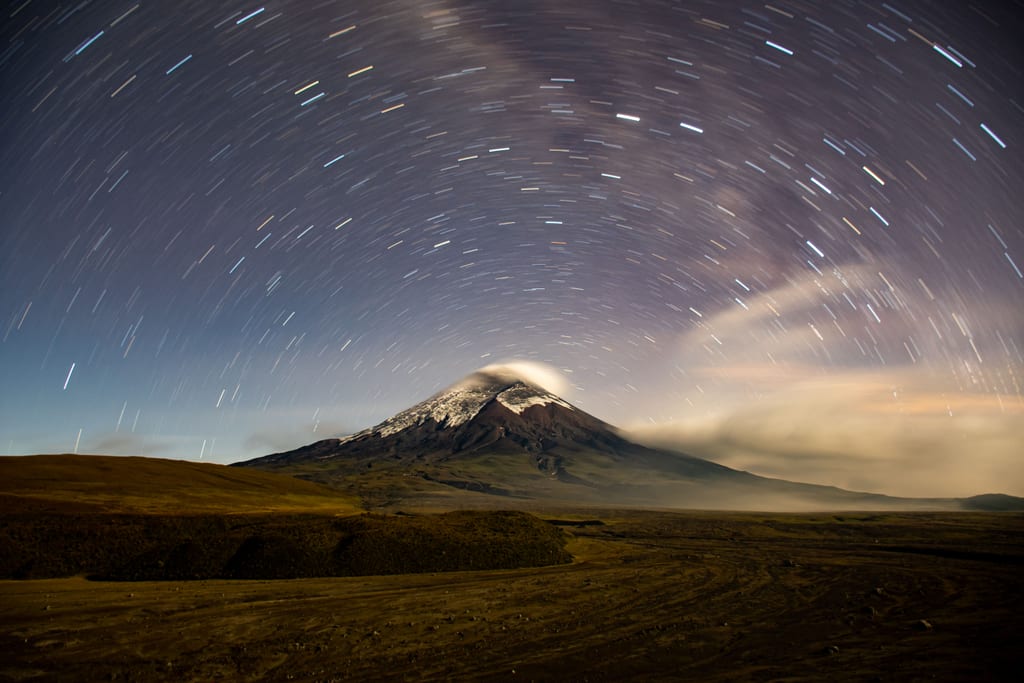
Cotopaxi National Park's altitude and distance from Quito's light dome make it one of the best accessible spots in Ecuador for night photography — the volcano's silhouette against the Milky Way core is a signature shot on our itineraries between roughly November and April, when the galactic core is best positioned in the evening sky. Bring warm layers; overnight temperatures at the park's elevation drop well below freezing even in the dry season.
Final thought
Plan for June–September if the calendar is fully in your control, shoot at first light regardless of month, and treat any clear window — even a partial one — as the shot, not the wait.